Jedrick Regala Zablan
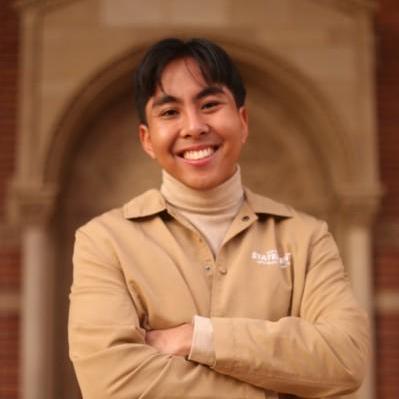
I’m a UC Berkeley MSSE graduate driven to apply my experience in software engineering, machine learning, and data analysis to solve meaningful problems in tech and science.
Molecular Sciences and Software Engineering Master’s Student
Technical Skills: Python, C++, PyTorch, TensorFlow
Education
- M.S., Molecular Sciences and Software Engineering: University of California, Berkeley (May 2025)
- B.S., Human Biology and Society, Summa Cum Laude: University of California, Los Angeles (June 2023)
Work Experience
IT Intern
Arthur J. Gallagher & Co. – San Diego, CA
Oct. 2024 – Present
- Implement and refine SQL-based reports to help IT analysts uncover key trends and support data-driven decisions.
- Design and implement an AI-powered workflow to automate Helpdesk triage, decreasing response time and enabling more efficient allocation of IT team resources.
- Develop interactive Power BI dashboards with responsive layouts and intuitive visual design, enabling business users to explore health insurance data efficiently.
Software Engineering Intern – Automation Technologies Group
Merck & Co. – Rahway, NJ
Jan. 2025 – May 2025
- Built MerckVision, a Python-based application combining computer vision and an interactive user interface, reducing image analysis time from 1 hour to under 1 minute per 96-sample batch.
- Designed intuitive UI tools for manual annotation, classification adjustment, and CSV export, improving user workflow and data traceability for end users.
- Engineered a hybrid detection pipeline using edge detection, peak analysis, and a ResNet model, improving phase classification and measurement accuracy by 50%.
- Delivered a modular, production-ready software package with user documentation, tutorials, and retraining support for long-term scalability.
- Acted as both Developer and Scrum Master, leading sprint planning, coordinating task tracking, and translating stakeholder needs into implementable features.
Quality Improvement Research Team Member
MyUCLA Health Ambassadors - Ronald Reagan Medical Center – Los Angeles, CA
May 2021 – Jun. 2022
- Co-led a data-driven evaluation of the hospital’s patient portal, analyzing user interactions and mapping user flows to identify usability gaps and interface improvements.
- Conducted in-depth interviews and analyzed large datasets from hospital administration, physicians, and patients to develop and implement effective intervention strategies.
- Presented intervention project at UCLA Undergraduate Research Week for research panel and hospital stakeholders.
Undergraduate Research Intern
X. William Yang Lab – UCLA Semel Institute – Los Angeles, CA
Jan. 2021 – Jun. 2022
- Conducted neural reconstructions of transgenic mice neurons using NeuTube to explore the relationship between genetics, structure, and function in neurological disorders.
- Leveraged quantitative imaging and data analysis to gain insights into synaptic plasticity, contributing to neuroscience discoveries and the development of machine learning algorithms.
- Presented complex model findings to academic audiences, showcasing strong oral and written communication skills.
Projects
MerckVision: Automated Computer Vision Analysis for Liquid-Liquid Extraction
📁 GitHub repository in the process of being publicly shared by Merck
Developed a modular Python application integrating computer vision (OpenCV, YOLO), an interactive Streamlit UI, and ResNet-based classification to analyze phase boundaries in liquid-liquid extraction experiments. The tool reduced image analysis time from over 1 hour to under 1 minute per 96-sample batch, enabling researchers to visualize classifications, adjust detection settings, and export measurement data with traceability and reproducibility. The software supports multi-label phase identification, height measurements, and bulk image processing with customizable filters.
- Built fully interactive UI with support for classification overrides, rag/precipitate detection, and CSV export.
- Designed modular pipeline with pluggable ML model architecture and scalable batch processing.
- Delivered production-ready documentation, tutorials, and user support materials.
Development of General Purpose Software Library for Cellular Automata Simulations
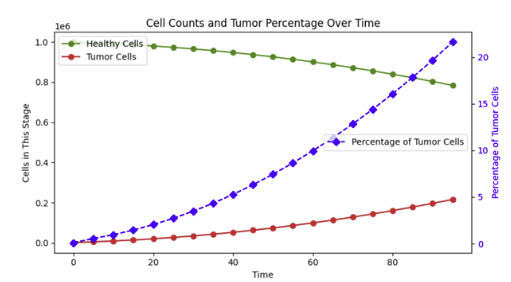
This repository contains a comprehensive C++ library for Cellular Automata (CA) simulations, developed as part of the Chem 274B course. This group project showcases best practices in software engineering by designing and implementing a reusable CA library, a demonstration application using the library, and detailed analyses of the application outputs. My group successfully created an application that simulates the growth of cancer cells in tissue. The cancer starts from the center of the matrix and spreads outward to other cells using a simple model based on the Von Neumann neighborhood. This model does not account for tissue density, cell properties, or real-life cell-cell interactions. All source codes, documentation, and examples illustrating the library’s capabilities are included. Additionally, the repository contains a PDF with a reflective analysis of the software development process, highlighting collaboration in cross-functional teams, algorithmic performance, and lessons learned.
Graph of Von Neumann Model Results
Natural Language Processing Analysis Project
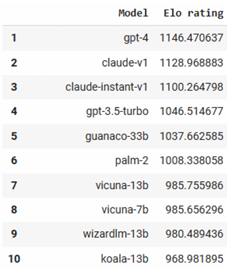
This repository contains the different files presented for the DATA 200s final group project, focused on analyzing and predicting the outcomes of chatbot duels using a comprehensive dataset from Chatbot Arena. We employed various methods including extensive exploratory data analysis (EDA), logistic regression, linear regression, and clustering techniques to evaluate chatbot performance. The dataset, comprising 33,000 conversations, was cleaned and reduced to 25,322 for analysis. Key methodologies included pairwise fraction analysis and Elo rating systems to measure model performance, K-Means clustering, and one-hot encoding to enhance feature representation. We utilized KFold Cross-Validation to assess model robustness and experimented with PCA for dimensionality reduction, although it proved less effective. Our approach highlights the challenges of modeling chatbot interactions and the importance of advanced data preparation and feature engineering in improving model accuracy.
Table Ranking Top Chatbot Models After Analysis
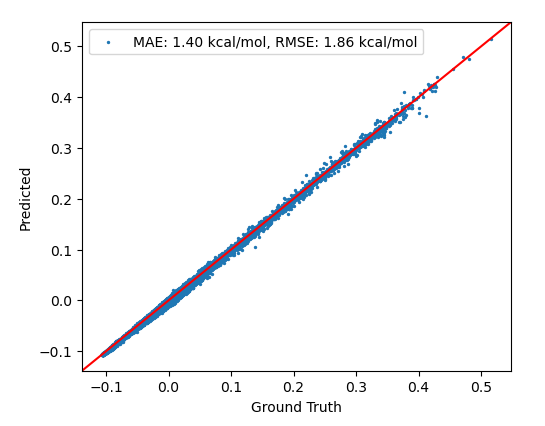
Supervised ANN Model With Results
This repository contains the final project for CHEM 277b: Machine Algorithms, focused on developing a supervised learning Artificial Neural Network (ANN) model applied to the ANI-1 dataset. The project involves progressive development with regular check-ins to ensure steady progress and thorough documentation. Key milestones include data preparation, network construction, and regularization strategies with hyperparameter tuning. This repository includes a detailed Jupyter notebook documenting all stages and an individual report comparing the model’s results with those reported in the literature. The report covers the introduction, methods, results, and discussion, providing a comprehensive overview of the project’s workflow, findings, and conclusions.
Graph of ANN Model RMSE and MAE
Computer Vision Analysis For Soccer/Football Videos
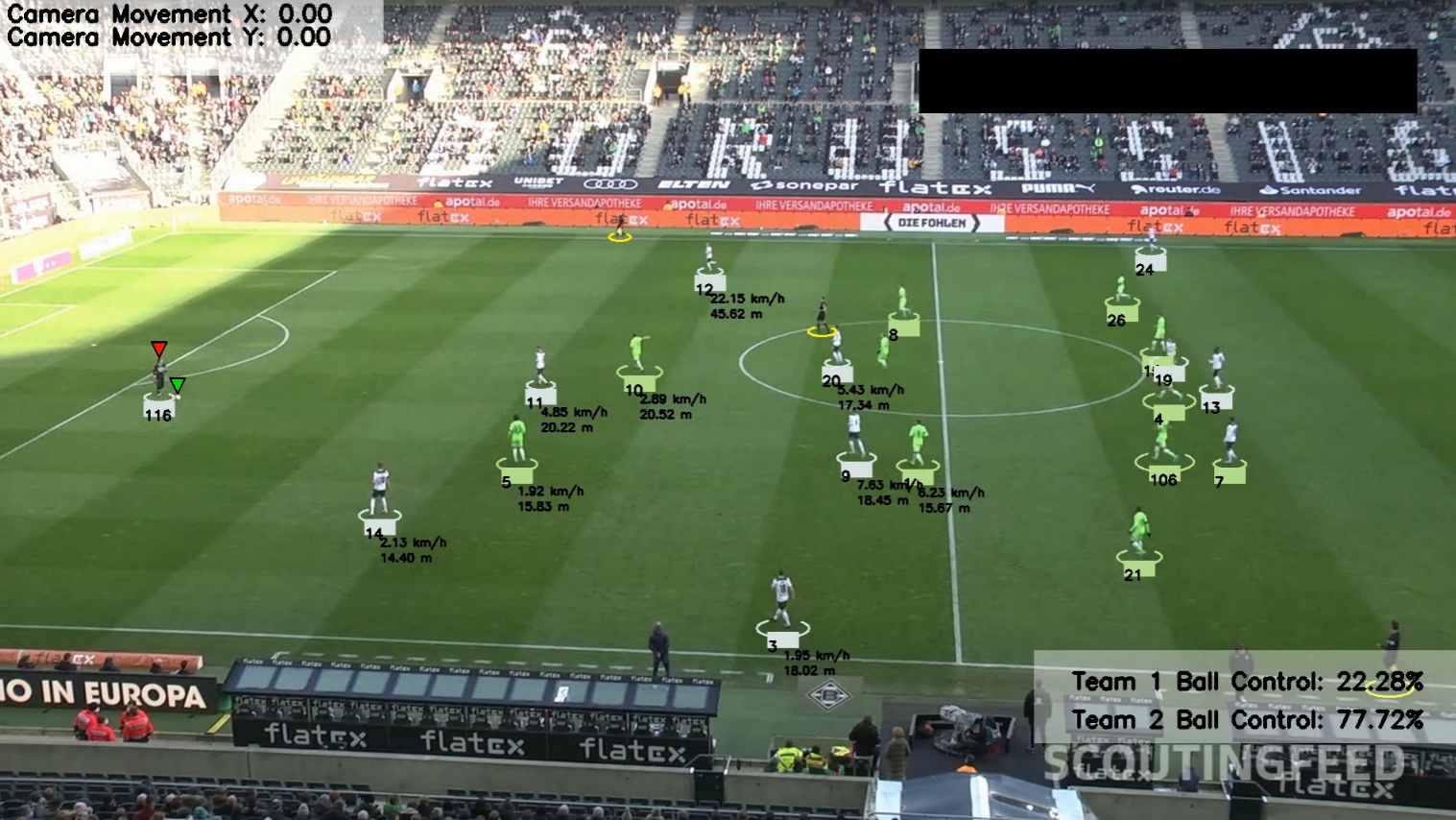
This project leverages YOLO (You Only Look Once) to develop a computer vision system for analyzing soccer games. The system is designed to provide comprehensive insights into player movements and team performance. It records team ball control, assigns players to teams using k-means clustering, and actively tracks the ball and the player with the ball. Additionally, the system tracks the camera movements, monitors the speed of the players, and calculates the total distance traveled by each player throughout the game.
Screenshot of Output Video